Are you wondering why your website isn't getting the clicks it used to, even though you're still ranking on page one?
You aren't imagining things. The "Search Engine" we grew up with has changed a lot.
More and more, it works like an "Answer Engine." In 2026, when someone needs a plumber, a dentist, or a local cafe, they don't always scroll through a list of links.
They ask their phone a question, and an AI tool writes them a short answer with a few businesses in it.
If your business isn't part of that answer, a lot of people never see you. Getting into it is what Local Answer Engine Optimization (AEO) is about.
The good news is that it's mostly the same honest work that has always helped small businesses get found.
There is a lot of hype around AI search right now, so in this guide I'll stick to what Google itself says, and show you what to do step by step.
To keep things concrete, we'll follow one example the whole way through: a hardware store in Berne, Indiana.
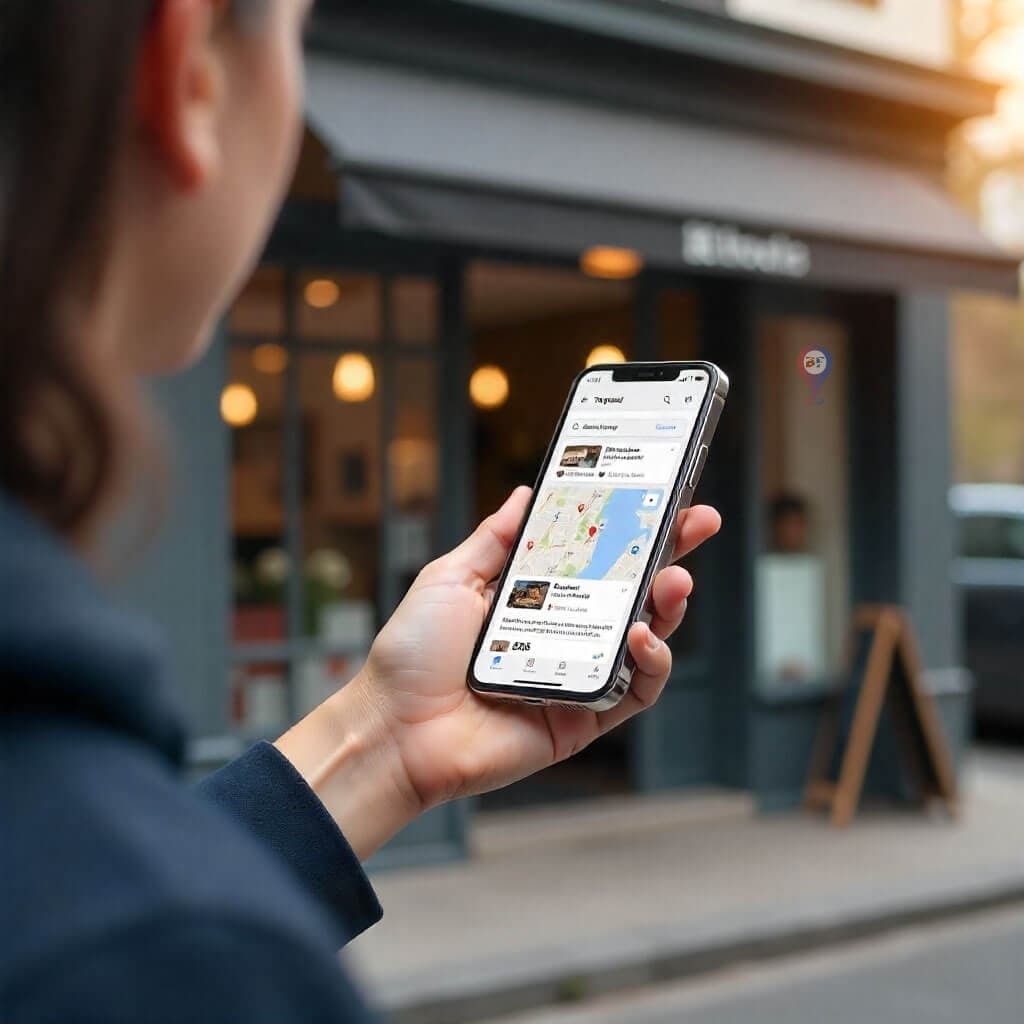
What is Local AEO and Why Does Your Business Need It?
Local AEO is the process of making sure AI tools, like Google's AI Overviews, Apple Intelligence, and ChatGPT, pick your business as a good answer for a local search.
Unlike traditional SEO, which focuses on getting you into a list of blue links, AEO focuses on "The Answer." When a potential customer asks, "Who is the most reliable electrician near me for emergency repairs?" the AI looks across the web, pulls together what it trusts, and names one or a few options.
People really are asking these tools for local help.
BrightLocal's 2026 Local Consumer Review Survey found that use of ChatGPT and other AI tools for local recommendations rose from 6% the year before to 45%, making them the third most popular source of business recommendations.
That is a big jump in one year.
For you, this means the stakes are higher. You are competing to be the source the AI trusts about your kind of business in your town. Our page on Answer Engine Optimization strategies explains how we help AI tools understand exactly who you are.
What Google itself says about AI search
Before you spend a dollar on "AI SEO," read what Google actually tells website owners.
Its guide on AI features says: "There are no additional requirements to appear in AI Overviews or AI Mode, nor other special optimizations necessary." To show up as a link in those answers, a page must be indexed and eligible to show in Google Search with a snippet.
Google also says: "There's also no special schema.org structured data that you need to add."
In its guide to generative AI search, Google goes further.
It says you can ignore llms.txt files and other "special" markup, that there's no requirement to break your content into tiny pieces ("chunking"), and that you don't need to rewrite your content just for AI.
What it does say matters most is content that is unique and useful: "Creating content that people find unique, compelling, and useful will likely influence your website's presence in generative AI search in the long run more than any of the other suggestions in this guide."
So if someone sells you a secret AI trick for local AEO, be careful. Local AEO is good local SEO, done well and kept up to date.
How Local Search Changed in 2026
In the old days, you could stuff a few keywords onto a page and wait for Google to find you. Today's systems are much smarter. They look for "Entities" and "Authority."
Google doesn't just see the word "Pizza." It sees your business as an entity: a real thing with a name, a location, hours, a category, and a reputation based on what real people say.
Entities in SEO simply means Google connects all the facts about your business into one picture, instead of just matching words on a page.
Because of this, your foundation needs professional SEO consulting to make sure your technical setup matches how these systems read the web.
Google also explains that AI Overviews and AI Mode may use a "query fan-out" technique, "issuing multiple related searches across subtopics and data sources" to build one answer.
In plain words, one question from a customer can turn into several searches behind the scenes.
Say someone in Berne asks, "Where can I get a key cut and buy a snow shovel today?" The AI may look up hardware stores nearby, which ones are open, and which ones people say have good service, all at once.
Your business needs clear answers ready for each of those smaller questions.
How Google picks local businesses
For Maps and local results, Google says local results are "mainly based on relevance, distance, and popularity." Here is what each one means for you:
- Relevance is how well your Business Profile matches what someone is searching for. Complete, detailed info helps.
- Distance is how far you are from the person searching. You can't change this, but you can make sure your address and service area are right.
- Popularity, which Google also calls prominence, is how well-known your business is. Google says this is based on things like how many websites link to your business and how many reviews you have.
These same signals feed the AI answers, because the AI draws on what Google already knows about your business.
What an entity looks like for a Berne hardware store
Say the hardware store is called "Main Street Hardware" (a made-up name for this example). For Google to see it as one clear entity, these details should match everywhere they appear:
- The business name, written the same way on the storefront, the website, and the Google Business Profile.
- The street address and phone number.
- Store hours, including holiday hours.
- The main category (hardware store) and the real services, like key cutting, paint mixing, or tool rental, if the store offers them.
Google's own profile rules say your name "should reflect your business's real-world name, as used consistently on your storefront, website, stationery, and as known to customers." That means no stuffing extra keywords into the business name.
"Main Street Hardware" is right. "Main Street Hardware Best Tools Berne Indiana" breaks the rules and can get your profile in trouble.
The 2026 Local AEO Checklist: How to Win
1. Structure Your Content for "The Answer"
When you write for your website, stop burying the lead. People want the answer at the top, and so do the systems that read your page. This is often called "Answer-First" formatting.
Ask yourself what question a customer brought to the page, and answer it in the first sentence or two. Then add the details below.
Here is what that looks like for our hardware store. A weak page says, "We are a family business committed to serving our community with quality products." A strong page answers the questions people actually ask:
- "Yes, we cut keys while you wait, including most house and padlock keys."
- "We mix paint in the store. Bring a chip or a photo and we'll match the color."
- "We're open until 6 p.m. on weekdays and until 3 p.m. on Saturday."
(Those are examples. Only write what is true for your own store.)
A good way to find these questions is to write down what people ask you on the phone and at the counter for one week. Each common question can become a clear heading with a short, direct answer under it.
An FAQ section works well for this. You don't need to chop your page into tiny pieces, though. Google says it can understand a page that covers several topics and show the right part to the right person.
Write for your customer first.
2. Claim Your Entity, Not Just Your Listing
Your Google Business Profile (GBP) is your most important asset for local search and local AEO. Google's own tips for better local ranking start here:
- Verify your business. Google says this tells it you're authorized to represent the business, "so it's more likely to show up in search results."
- Fill in everything. Google says "businesses with complete and accurate info are more likely to show up in local search results." That means your full address, your hours (including special hours for holidays), your category, and details like parking or Wi-Fi.
- Add photos and videos of your real store, your real work, and your real team.
- Respond to reviews. More on this below.
But in 2026, you need to go further than Google.
Apple says businesses can claim their location on Apple Maps through Apple Business and "control how your business appears with your logo, hours, images, and key details." Claim that too, along with the other listing and review sites your customers use.
Every place your business shows up should tell the same story.
You also need to make sure your Schema Markup is updated. Schema is code that visitors don't see, and it tells search engines exactly what you do and where you do it.
Google says that with LocalBusiness structured data, "you can tell Google about business hours, different departments within a business," and more.
Here is the honest part: Google also says structured data isn't required for its AI features, and there's no special schema you need for them.
It's still worth doing well, because it helps you qualify for rich results in regular search.
Just follow Google's rule: "Don't mark up content that is not visible to readers of the page." If your schema says you're open Sundays, your website should say so too. Our schema markup service covers this in detail.
3. Focus on "Human-Verified" Content
A lot of the web is now filled with generic, AI-written filler. Google has been clear about this.
It says using generative AI tools "to generate many pages without adding value for users may violate Google's spam policy on scaled content abuse." What Google wants to see is Experience. Talk about actual projects. Mention neighborhood names.
This proves you are a real human business. This is why affordable SEO services are so important for small businesses to tell their story correctly.
Google's guide on generative AI search explains the difference with two kinds of content. "Commodity content" is based on common knowledge that "could originate from anyone." Non-commodity content gives "unique expert or experienced takes that go beyond common knowledge."
For our hardware store, commodity content is a page titled "5 Tips for Painting a Room." A thousand websites have that page.
Non-commodity content is the owner explaining which exterior paint holds up on old farmhouse siding, what the store recommends for a basement that stays damp, or how to pick the right size of snow blower for a long gravel lane.
That comes from real conversations at the counter, and nobody else can write it for you.
Google also suggests asking "Who, How, and Why" about your content. Who wrote it? (Put a real name on it.) How was it made? Why does it exist? (To help a customer, not to fill a page for search engines.)
A quick local AEO checklist you can finish this week
- Search your business name on Google and Apple Maps. Check that the name, address, phone, and hours are right on both.
- Fill in every empty field in your Google Business Profile.
- Write down the ten questions customers ask most, and make sure your website answers each one near the top of a page.
- Add an "About" section with your real name, your story, and real photos.
- Reply to every review from the last three months.
- Ask Google, ChatGPT, and Siri the kind of question a customer would ask, like "hardware store near Berne that cuts keys," and write down what they say about you.
Why Speed and Mobile-First Design are Non-Negotiable
If your website is slow on a smartphone, you lose people before they read a word. Most local searches happen on a phone, while someone is walking, driving, or doing three other things.
Your site must be fast, easy to tap, and set up so a visitor can call you or get directions right away.
Google measures page experience with three numbers called Core Web Vitals.
Its targets are: the main content shows up within 2.5 seconds (Largest Contentful Paint), the page responds to a tap within 200 milliseconds (Interaction to Next Paint), and the layout moves 0.1 or less while it loads (Cumulative Layout Shift).
You can check your own pages for free with Google's PageSpeed Insights.
Our guide on what makes a website fast explains how to fix the usual problems, and mobile-first web design explains how a site should be built for phones from the start.
For a hardware store, the mobile checklist is simple. Does tapping the phone number start a call? Is there a "Get Directions" link?
Are your hours on the homepage? Could someone standing in their garage with a broken part find out in ten seconds whether you have it or can order it?
The Power of Conversational Reviews
In 2026, a simple "5 stars" isn't enough. AI tools read the text of your reviews to understand the details of your business.
A review that says "They cut three keys for me and helped me find the right hinge for my old cabinet" tells a search system far more than "Great store!"
This is where you need to be careful, though. You can ask every customer for an honest review, and Google encourages it. Its tips suggest sharing a Google link or a QR code so customers can leave one.
But Google's rules also say businesses should not "request that specific content be included" in a review, should not "selectively solicit positive reviews," and must never offer "free or discounted goods or services" in exchange for a review.
So don't hand customers a script, and don't offer 10% off for a review. A simple "It would really help us if you'd tell others how your visit went" is fine.
The details come on their own when customers had a good, specific experience.
Replying matters too. BrightLocal's 2026 survey found that 80% of consumers say they're likely to use a business that responds to all of its reviews.
The same survey found that templated or generic responses make 50% of consumers unlikely to choose a business.
Google's own reply tips say the same thing: "Instead of sending the same 'thank you' to everyone," focus on replies where you can share a helpful update or answer a question.
Our article on why you should respond to Google reviews walks through how to reply, including to the unhappy ones. The more real, detailed, "conversational" your reviews and replies are, the better your presence in voice search and AI answers.
Dealing with "Zero-Click" Searches
A "Zero-Click" search is when a person gets the information they need right on the search page and never clicks through to a website. That can feel like a loss. But it still builds Brand Authority.
If the answer someone reads names your store, your hours, and your good reviews, you are the business they remember when they're ready to buy.
Google says the clicks that do come from AI answers tend to be good ones: "when people click from search results pages with AI Overviews, these clicks are higher quality (meaning, users are more likely to spend more time on the site)." It also says AI Overviews "often don't trigger," because they only show when Google thinks they add something to regular results.
So your normal search results still matter a lot.
You can see how you're doing. Google says the Generative AI performance report in Search Console shows how your content is performing in its AI features.
Traffic from AI Overviews and AI Mode is also counted in your regular Search Console numbers. For local businesses, also watch your Google Business Profile insights: calls, direction requests, and website clicks.
For a hardware store, a direction request is often worth more than a website visit.
Vertical Focus: AEO for Home Services
For plumbers, electricians, and HVAC pros, AEO is built on Urgency and Trust. When a furnace goes out at 2 AM, people aren't reading blogs. They're asking voice assistants who can come out right now.
Expert SEO consulting makes sure your emergency availability is clear to AI search engines.
In practice, that means your Google Business Profile hours must be true. If you offer 24-hour emergency service, say so in your profile and on your website in plain words. If you don't, don't pretend.
Also list the towns you really serve, the services you really offer, and what a customer should expect when they call after hours. Our pages on HVAC and plumbing SEO go deeper for those trades.
Vertical Focus: AEO for Health Professionals
Health professionals need to take E-E-A-T (experience, expertise, authoritativeness, and trust) very seriously. AI tools and search systems are extra careful about medical topics.
Google says its systems "give even more weight to content that aligns with strong E-E-A-T for topics that could significantly impact the health, financial stability, or safety of people." It calls these "Your Money or Your Life" topics.
For a dentist, chiropractor, or clinic, that means every health page should show who wrote or reviewed it, with their real credentials. Answer common patient questions clearly and carefully, and tell people when they should see a professional in person.
Proving credentials and giving accurate answers to common questions is how you win lifelong patients in the AI era. Our healthcare SEO page covers this in more detail.
Vertical Focus: AEO for Local Retail Stores
Retail stores like our Berne hardware store have one big advantage in local AEO.
Google says that if you have a retail store, "you can show your in-store products on your Business Profile," and "your in-store products might show in local search results and customers can find out what's in stock." (Google notes this is only available for retail businesses in eligible countries or regions.)
Think about how people shop at a hardware store. They often need one specific thing, today.
"Who has furnace filters near me?" "Where can I buy a replacement faucet cartridge?" If your products and stock show up, you can be in the answer to those questions.
Pair that with a website that lists the product lines and services you carry, and clear store hours, and you've covered most of what a local shopper asks.
Advanced Local Schema: Giving AI a Map
You may have read that "Speakable Schema" is the key to voice search optimization. I want to be honest with you here, because a lot of articles, including an earlier version of this one, oversold it.
Google's own page says speakable markup is still in beta.
It's used to read out answers to "topical news queries" on smart speakers, and it works "for users in the U.S. that have Google Home devices set to English." It was built for news publishers.
For a hardware store, a plumber, or a dentist, it isn't going to be what gets you picked.
The schema that does make sense for most local businesses is LocalBusiness structured data (or a more specific type, like HardwareStore or Dentist). It gives search engines a clean map of your name, address, phone, hours, and departments. Keep it simple:
- Use it on your homepage or contact page.
- Make every detail match what visitors can see on the page and what's in your Business Profile.
- Update it when your hours or phone number change.
- Test it with Google's free Rich Results Test.
Local business schema won't win the answer by itself. Google says so plainly. But clean, accurate data makes it easier for every system to read your business correctly, and that helps the technology promote your business.
What You Can Skip (According to Google)
A lot of money is being spent on "AEO hacks" that Google says don't help with its search. Here is what you can skip for Google:
- llms.txt files. Google says you "don't need to create new machine readable files, AI text files, markup, or Markdown" to appear in Google Search, because Google Search doesn't use them. (It's fine to have one for other tools. It won't hurt.)
- Chopping pages into tiny pieces. Google says there's no ideal page length. Make pages for your audience.
- Buying or faking "mentions." Google says "seeking inauthentic 'mentions' across the web isn't as helpful as it might seem."
- Tools that promise results. Google warns you to be wary of third-party tools "that promise ranking success."
Other AI tools work in their own ways, and nobody outside those companies knows every detail. But real, accurate information about your business, shown the same way everywhere, is the safest bet for all of them.
How to Check How AI Sees Your Business Right Now
You can do a simple local AEO check yourself in about 30 minutes:
- On your phone, ask Google, ChatGPT, and Siri three questions a customer would ask. For our example: "best hardware store in Berne, Indiana," "where can I get a key cut in Berne," and "is there a hardware store open Saturday near Berne?"
- Write down whether your business shows up, and what each tool says about you.
- Check every detail it gives. Wrong hours or an old phone number usually means a listing somewhere is out of date.
- Look at which businesses do show up, and read their profiles and reviews. What do they have that you don't?
- Repeat once a month. Answers change often.
If you'd rather have an expert look at it, our AI visibility audit checks how AI tools see your business and what to fix first.
Conclusion: You Are the Future of Your Town
The shift from SEO to AEO is a real change in how search works, but the work that wins is familiar.
As we move through 2026, the gap between businesses that keep their information accurate and share real knowledge, and those that don't, will only grow wider.
Don't let your business get buried. Use local SEO services to bridge the gap.
Keep your Google Business Profile complete, answer your customers' real questions on your website, earn honest reviews and reply to them, and keep your site fast on a phone.
In the new world of Answer Engines, the company that provides the best answer has a real chance to win, whatever its size.
For another view on this topic, you can read SEMrush's Guide to AEO, which covers answer engine optimization from the side of a large SEO tool company.
Related reading on our blog: Local SEO Guide: Rank in Your City | Technical SEO Checklist for 2026
Stop Being Invisible in Voice Search
Ready to become the definitive answer for your local area?
At BuzFind, we bridge the gap between traditional SEO and AEO. We've been helping small businesses get found online since 2004.
Start with a free SEO audit to see where your website stands today, and what to fix first so search engines and AI tools can understand your business.