Generative EngineOptimization
Are AI Search Engines "Stealing" Your Traffic Without Giving You the Click?
You've put a lot of time, money and late nights into your website. You did the "traditional" SEO work. Maybe you bought backlink packages or wrote the standard 500-word blogs everyone said would work. And your traffic is still going down.

If you own a website right now, you may be watching tools like SearchGPT, Perplexity, and AI Overviews give people the answer before they ever click your link. It can feel like you've hit a ranking ceiling you can't get past.
AI tools can read your site, use your hard-earned content to answer someone's question, and still send you no visitors. That's frustrating, and it isn't your fault.
The answer is Generative Engine Optimization (GEO): making your content clear and trustworthy enough that AI tools use it and name you as the source.
The GEO shift is happening now
AI search is already changing how people find businesses.
Google, ChatGPT, and Perplexity are answering more questions directly, before anyone clicks a link.
When an AI engine answers the question itself, fewer of those searches turn into a visit to any website.
When an AI answer does cite a source, your name is in front of the reader right when they're looking for an answer.
AI citations depend on the engine, not just your site. We check your site with you and adjust as we go. We don't promise a date.
What the heck is GEO (and why you're losing without it)?
Generative Engine Optimization means shaping your content so AI tools like ChatGPT and Google's AI Overviews use it and credit you. Page 1 rankings still matter, and GEO adds a second goal: making your brand the cited authority inside the AI's answer.
It's More Than Meta Tags Now
A fast site, good internal links and clear expert signals (real names, real credentials and real experience) show AI tools that a real expert is behind your content, someone worth quoting.
From Keywords to Real Answers
Old SEO was built around keywords. GEO is built around clear, specific answers to real questions. Generic advice gets summarized and forgotten. Specific, well-sourced answers get quoted, with credit.
Give AI a Reason to Name You
Your content should be specific enough (your own numbers, your own process, your own experience) that an AI answer has a reason to say "according to [Your Brand]" instead of repeating the idea without you.
The BuzFind GEO masterplan: your 4-phase roadmap
Here is how we work on your ranking ceiling and your chances of being cited by AI tools, step by step.
AI Visibility Audit & Discovery
We look at your content the way an AI crawler does. We find what makes it hard for AI tools to tell that your business is the original source, like missing schema, vague answers, or thin expert details.
Build Topical Authority
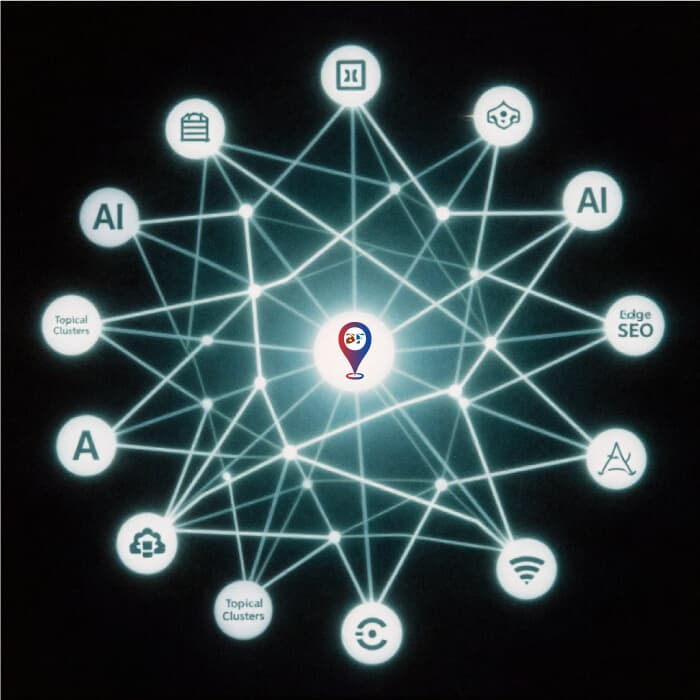
We plan clear topic groups that show real depth, and show you how to link them together so AI crawlers can find your best, most complete pages faster than they could on a flat, unlinked site.
Write Clear Answer Blocks
This is the most important piece. We draft new versions of your key sections as short answer blocks (a direct question followed by a direct answer), so an AI engine can pull your content more easily and cite you as the source.
Speed and Crawl Basics
On the technical side, we check that your main content and schema are in the HTML your server sends, so crawlers get them in the first response. We also flag Core Web Vitals problems so your site loads fast when an AI tool checks it.
Why internal linking is your secret weapon for AI discovery
Internal links help people move around your site. They also do a second job: Discovery.
If your internal linking is weak, you end up with pages that have great info but that AI crawlers never find. Think of it like a library where all the books are scattered on the floor with no labels.
Link to Your Proof
Connect service pages to supporting blog content. It tells the AI, "Here is proof we know how to do this."
Show Your Full Range
Link related service categories to show the breadth of your business, not just one narrow page.
Write Clear Link Text
Use plain link text that tells readers and AI what the next page is about before they click.
A well-linked site is easier for AI crawlers to fully discover and trust. Need a map of your entire site? Check out our HTML Sitemap.

The "people-first" difference: content that helps readers
The internet is filling up with low-quality, robotic "corporate-speak" articles written by automated tools.
Natural Human Language
We skip phrases like 'In the ever-evolving landscape...' and write the way people talk to a friend.
Confident Action Tone
Instead of 'it might be helpful to...', we say 'Do this, and here's why.' Direct, clear writing builds trust with readers and AI.
Relatable Vibes That Convert
We write like a partner who understands your day-to-day work. An AI might cite you, but a person still has to decide to buy from you.
The Evergreen Content Philosophy
A lot of SEO advice chases every new algorithm update. At BuzFind, we believe in Evergreen Authority: well-researched, helpful content written for people. That kind of content has the best chance of holding up, whatever the next AI model looks like.
Technical basics for faster AI discovery
AI tools and Google read what your server sends first. So we check that your key content is in the first response.
If your page only shows its text after scripts run, some crawlers may miss it. We flag those pages, so you or your developer can make the content load with the page.
The Crawl Budget Advantage
Crawlers have limited "crawl budgets," so a slow site may get fewer pages read. If a crawler can read 10 of your pages in the time it takes to read 1 page on a slower competitor's site, more of your content gets seen.
Speed helps your visitors, and it also improves crawl efficiency for machines. Explore our Technical SEO Services.
Frequently asked questions
Straight talk about Generative Engine Optimization and what it means for your business.
Is my website basically dead because of AI search?
No. AI engines still need sources for their answers. They pull information from websites like yours and combine it. When your site is set up for Generative Engine Optimization, people who click through from an AI answer have often already read about your expertise, so they may be closer to getting in touch.
I've spent thousands on SEO and I'm still stuck. Why?
You may be hitting a ranking ceiling. Older SEO focused on keywords. Modern search also looks at entities (who you are) and topical authority (how well you cover a subject). If your content is scattered instead of grouped by topic, search engines and AI tools may see your site as thin. We help you build those topic groups.
Will this content get me flagged by AI detectors?
We follow our people-first writing rules: natural wording, varied sentences, and real experience in every piece. AI detectors often get things wrong, so no one can promise how a detector will score a page. What matters more is whether the content truly helps the reader. Our AI agents write the first draft, and you approve every piece before it goes live. On Local SEO plans and hourly work, a real person on our team edits it first.
How long does it take to see those AI citations?
Nobody can promise an exact date, including us. AI engines update their sources on their own schedule. What we can do is put the right signals in place fast, then check your results with you and adjust from there.
Do I need to delete all my old blog posts?
Please don't delete them yet. Old posts often still have value. We usually go through them and point out which ones need better headings, updated internal links and schema markup.
Is GEO only for big corporations with huge budgets?
No. Small and medium businesses have a real advantage here. You can focus on a narrow niche, change quickly, and sound more like a real person than a big corporation, where content often gets stuck in corporate-speak.
Stop losing traffic to AI answers. Start becoming the source they cite.
Watching your traffic drop month after month is stressful, and waiting for search engines to send those clicks back on their own rarely works. Starting now gives you a head start, since many businesses haven't begun this work yet.
Take control of your Generative Engine Optimization and work on making your website a source that ChatGPT, Gemini, and Google AI Overviews want to cite.