You know your trade better than anyone. You know your customers, your town, and how to run your business. What you probably do not have is spare time to keep up with how Google works, and it keeps changing.
This guide explains what SEO consulting is, what it looks like for a business in Portland and Jay County, and how to tell if it is worth paying for.
You do not have time to spend hours every week reading about Google's latest algorithm updates or AI Overview changes. You have a business to run in Portland, Indiana. You have staff to manage, work to track, and customers to serve.
That is exactly why SEO consulting exists. Part of it can be someone doing the work for you. The bigger part is having a specialist who shows you the shortest path to more customers, so you stop guessing.
The goal is to move your business from invisible to the one people find first when they search for what you do in Portland.
Keywords still matter in 2026, but they are only one piece. Google also looks for signs that you are a real, trusted business and that your pages actually answer people's questions.
For a local business, that means being the best answer for your neighbors in Portland.
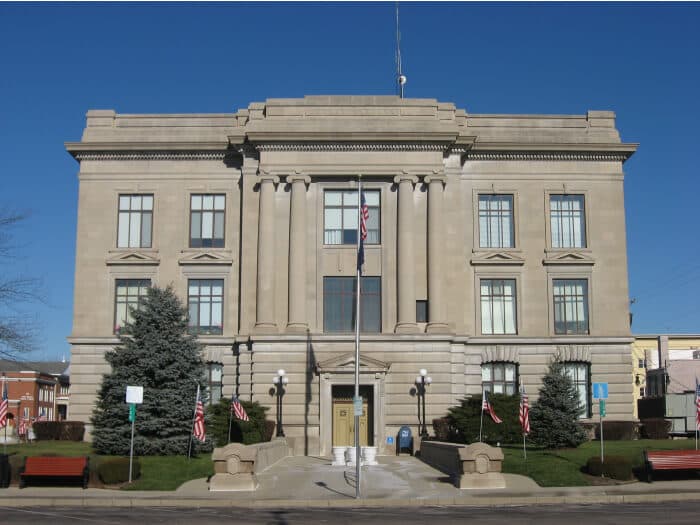
What Does an SEO Consultant Actually Do?
A consultant does more than "fix" your website. They look at your whole online presence: your website, your Google Business Profile, your reviews, and how your business shows up when people in Portland search.
Then they tell you what to fix first and why. For a Jay County business, that usually covers four areas.
To keep this practical, we will use one example all the way through. Say an independent insurance agency in downtown Portland sells auto, home, farm, and business insurance.
The owner is good at her job and her customers like her, but when someone in town searches for an insurance agent, her agency does not show up near the top.
Competitor Intelligence
This means looking at exactly what your competitors on Meridian Street are doing to win the Local Pack (the map and three business listings Google shows for many local searches).
Meridian Street runs through Portland's historic downtown business district, so for a lot of local businesses, the competition is literally down the block.
For our insurance agency, a consultant would search the phrases local people actually type, like "insurance agent Portland Indiana" or "farm insurance Jay County", and write down who shows up. Then they compare. How many reviews does each agency have?
What category did they pick on their Google Business Profile? Do they have a separate page for each type of insurance, or one page that lists everything? Does their site load fast on a phone?
The gaps you find are your to-do list. Our competitor analysis service does this in depth, but you can start it yourself with a notepad and 20 minutes.
Profit-First Growth
This means finding which of your services have the highest search volume and the highest profit margin. Those are the ones to push first.
Not every service is worth the same to you. Say the insurance agency owner knows from her own books that one farm or business client is worth far more to her than one small auto policy.
A consultant would not start by chasing the phrase with the most searches. They would start where searches and profit meet. That could mean building a strong page about farm insurance for Jay County families before anything else.
You know your numbers. A good consultant asks for them before making a plan.
Topical Authority Mapping
This means making a plan for content that shows Google you are the expert for Portland and the towns around it.
In plain words: a page for each main service, written for real local customers, and helpful articles that answer the questions people ask you every week.
For the insurance agency, that might look like this:
- One page each for auto, home, farm, and business insurance.
- Short articles that answer common questions, like what a farm policy usually covers or what to do right after a car accident.
- Pages or sections for the nearby towns the agency serves, like Dunkirk, Redkey, Pennville, Bryant, and Geneva, written only if the agency truly serves them.
Google's own guidance on AI search puts it simply: content that is unique, useful, and based on real experience is what counts most. An agent who has handled local claims for years knows things a generic article never will. Write that down.
Technical Resilience
This means making sure your site is fast, secure, and ready for Google's next major core update. You cannot control Google's updates.
You can make sure your site is the kind of site Google rewards: it loads fast on a phone, it uses a secure connection, every page can be found and read by Google, and nothing is broken.
Our technical SEO guide for Portland businesses goes into each of these checks.
Before You Talk to a Consultant: Gather These Five Things
You will get much more out of SEO consulting if you walk in prepared. Before your first call, gather:
- Your website address and the login for wherever your site is built or hosted.
- Access to your Google Business Profile.
- Access to Google Search Console, if you have it. It is a free Google service that shows how your site appears in search results.
- A list of your services, ranked by how much they are worth to you.
- The names of the three or four competitors you run into most often.
On Search Console: Google says that if an SEO offers you an audit, you should only give them read access at that stage, not full control. That is good advice for any first meeting. A trustworthy consultant will not mind.
The Jay County Advantage: Using Local Context
If you are a local business, your biggest advantage is being local. A consultant helps you lean into that. We help you build an online presence that is deeply rooted in our community.
Portland is the county seat of Jay County. People here know their town, and they search the way they talk. Someone might not type "insurance agency".
They might type "insurance near me" while sitting in their truck downtown, or search for a service near a place everyone knows.
This includes optimizing for local landmarks and well-known places. When someone searches for a service "near the Jay County fairgrounds," you want to be the first name that pops up.
The fairgrounds sit on East Votaw Street in Portland, and everybody in the county knows where they are.
Mentioning real, nearby places on your site, the way you would when giving directions over the phone, helps customers and helps Google understand where you are. This is a core part of our SEO consulting services.
A word of caution: only mention places that are true for your business. If your office is not near the fairgrounds, do not claim it is. Google and your customers will both notice.
Your Google Business Profile does most of the local work
For local searches, your Google Business Profile often matters as much as your website. Google says local results are mainly based on three things: relevance, distance, and popularity (which Google also calls prominence).
- Relevance: how well your profile matches what someone is searching for.
- Distance: how far your business is from the person searching.
- Prominence: how well known your business is. Google says this is based partly on how many websites link to you and how many reviews you have, and that more reviews and positive ratings can help your local ranking.
You cannot change your distance from a searcher. You can work on the other two. Google also says there is no way to request or pay for a better local ranking.
Anyone who says they can buy you a top spot on the map is not telling you the truth.
Here is what the insurance agency, or any Portland business, can check this week:
- Is the business verified on Google?
- Is the main category correct and specific?
- Are the address, phone number, and hours correct, including holiday hours?
- Are there real photos of the office and the people who work there?
- Has every review, good and bad, received a reply?
On reviews, be careful. Google does not allow businesses to offer anything, like a discount or a gift card, in exchange for a review, and it does not allow asking only happy customers for reviews.
Asking every customer, with no reward attached, is allowed and works. Our Google Business Profile optimization service covers all of this if you would rather hand it off.
Beyond the Keywords
Consulting is about strategy. We look at your business goals first, and the search engines second. We want to see your revenue grow, not just your traffic statistics.
That means a good consultant asks about your business before they ask about your keywords.
Google's own advice on hiring an SEO says the same: a good SEO should ask what makes your business unique, who your competitors are, and how your customers find you.
If a consultant jumps straight to a list of keywords without asking those questions, that is a warning sign.
AI Overviews: The New Search Frontier
SEO in 2026 looks different than it did a few years ago. For some searches, Google's AI Overviews now show a short summary answer at the very top of the page, with links to the websites it used.
If your business is one of those links, you get seen before the regular results even start.
Google says AI Overviews only show up when its systems decide they add something to regular search, so they often do not appear at all.
When they do, to be shown as a link in one, your page has to be indexed by Google and eligible to appear in normal search results with a snippet. Google says there are no extra technical requirements beyond that.
A good consultant knows how to structure your business information so AI tools understand and recommend you. That comes down to clear, natural language that gives direct value to people in Portland.
If someone asks, "Do I need farm insurance if I only rent out my land?", a page that answers that question plainly, in the first few sentences, is the kind of page these tools can use.
Learn more about our specialized AI Overview optimization.
What you can safely ignore
You will hear a lot of advice about "optimizing for AI". Some of it is a waste of your money. Google's own guide on AI search says you can ignore:
- llms.txt files and other special AI text files. Google Search does not use them.
- "Chunking" content into small pieces just for AI.
- Special schema markup for AI. Google says structured data is not required for its AI features and there is no special markup you need to add. It is still worth using as part of normal SEO, because it helps you qualify for rich results.
So what actually works? The same things that work for regular Google search: real, helpful pages, a site Google can crawl and read, and correct business details.
If you want to see how your site is doing, Google suggests the Generative AI performance report in Search Console.
Your First 90 Days of Strategic Growth
Here is how the first three months usually look when we work with a local business. Every business is different, so think of this as a typical plan. Your own timeline may be faster or slower.
Month 1: The Foundation Audit
We do a deep check of your technical SEO, your Google Business Profile, and your local competitors. We find the leaks (the problems costing you visitors and calls) and fix those first.
For the insurance agency, that might be a contact page that does not work well on phones, a wrong business category, or two pages that say almost the same thing and compete with each other.
Our website audits page shows what each audit covers.
Month 2: Authority & Context Building
We start carrying out your local content plan. We fill out your Google Business Profile completely, add real local details, write or improve your main service pages, and set up a steady, honest way to ask customers for reviews.
Month 3: Refinement & Momentum
We look at the real data from the first two months. Which pages started showing up in search? Which searches brought people in? Did calls or form requests go up? We do more of what is working and adjust the plan for the long run.
Be patient with this part. Google says some changes can show up in a few hours, while others can take several months, and you should usually wait a few weeks before judging whether a change helped.
The first 90 days get the groundwork in place, and the work keeps going after that. Regular check-ins, like our monthly strategy calls, keep things moving.
Questions to Ask Any SEO Consultant
Whether you hire us for SEO consulting or someone else, ask these before you sign anything. Most of them come straight from Google's own advice on hiring an SEO:
- Can you show me examples of your past work?
- Do you follow Google's Search Essentials?
- What results do you expect, and how long will it take?
- How will you measure success?
- What experience do you have with businesses like mine, and in towns like Portland?
- How long have you been in business?
- How will we stay in touch, and how often?
- Will you tell me about every change you make to my site, and why?
Then call one or two of their past clients. Ask if the work was useful, if the consultant was easy to work with, and if they saw real results.
If you want more on picking the right help, read our guide on how to choose an SEO company in Portland.
Red flags to watch for
Google is blunt about this: no one can guarantee a number one ranking on Google. Be careful with anyone who:
- Guarantees rankings or a spot at the top.
- Claims a "special relationship" with Google.
- Is secretive, or will not explain in plain words what they plan to do.
- Offers to "buy" you a better spot on Google Maps, which Google says is not possible.
We never guarantee exact rankings either. The only guarantee we make is that our work is always ethical and done right.
Is SEO Consulting Worth the Investment?
Think about it this way: what is a single new high-value customer worth to your business?
Do the math with your own numbers. Take what an average good customer pays you in a year. Multiply it by how many years they usually stay with you.
For an insurance agency with loyal clients who renew every year, that number can be large, because one new household might stay for a long time. Now compare it with what consulting costs each month.
If a consultant helps you win just 5 or 10 more of those customers every month, the service pays for itself many times over.
It is an investment in something you own, your online presence and your reputation, instead of renting space with ads that stop the day you stop paying.
Ads still have their place, and our article on SEO vs. ads in Portland explains when each one makes sense. Check out our transparent pricing models for more details.
When consulting is not the right fit yet
SEO consulting is not the answer for everyone, and it is better to know that up front. It may not be worth it yet if:
- Your website is badly broken, very slow, or not mobile friendly. Fix or rebuild the site first, or the advice has nothing to stand on.
- You cannot take on more customers right now.
- You will not have any time to act on the advice, and you do not want to pay someone to do the work either.
Not sure where you stand? Start with our free SEO audit. It shows how your site does on speed and mobile use, and it costs nothing. If you are in Portland or nearby, you can also see what our Portland local SEO work covers.
What You Can Do This Week
You do not need to hire anyone to take the first steps. Here is a short list any Portland business owner can work through in an afternoon:
- Search for your main service plus "Portland Indiana" on your phone. Write down who shows up in the map and the first few results.
- Open your Google Business Profile and check your category, hours, phone number, and photos.
- Reply to any reviews you have not answered yet.
- Open your website on your phone. Can someone find your phone number and tap it to call in a few seconds?
- Make a list of the ten questions customers ask you most. Check whether your website answers each one.
- Sign up for Google Search Console if you have not already. It is free.
That list will not do everything a consultant does. It will show you where you stand, and it will make any conversation with a consultant, including us, much more useful.